

Woven ground cover specifications are the small details that decide whether your fabric lasts for years or falls apart in a few months. Two rolls of ground cover fabric can look exactly the same, cost almost the same, and still perform very differently in the field.
One survives season after season, while the other tears within weeks. The difference comes down to a few simple numbers on the product sheet that most buyers skip over. Let’s break them down, so you know exactly what to check before your next order.
Not every farm, garden, or nursery is the same. Some places get harsh sun all day. Some deal with heavy rain. Some have people and machines walking over the fabric every day. Buying without checking specifications is basically guessing, and guessing wrong means weeds growing back, fabric tearing early, or spending money twice on something you should have gotten right the first time.
These details also affect how easy the fabric is to install and how long it lasts, so looking beyond just the price helps you choose a product actually suited to your application.
PP woven ground cover is a polypropylene ground cover made by weaving strips of PP tape into a strong, tightly woven fabric. It’s laid over soil to block sunlight, which stops weeds from growing, while still letting water and air pass through so the soil underneath stays healthy.
It also holds up well under foot traffic and rough weather. That’s why this agricultural ground cover fabric is used so widely across farms, nurseries, orchards, and landscaping projects.
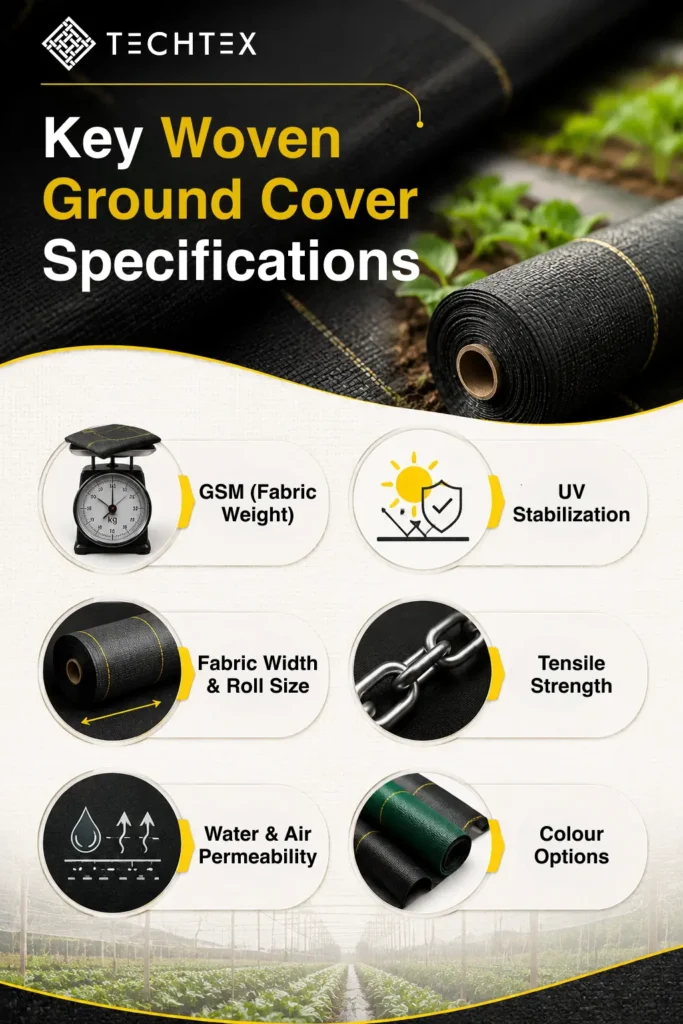
GSM simply means how much the fabric weighs per square metre, like fabric thickness for clothes. A higher GSM means a thicker, stronger material that handles rough use like walking or heavy watering, while a lower GSM means a lighter option suited to short term or gentle use. Always check the GSM and match it to how tough your job actually is.
Continuous sunlight exposure gradually weakens polypropylene materials over time. A UV stabilized ground cover is specially treated to resist this, helping it retain strength and flexibility for permanent or prolonged outdoor use.
This is simply how wide and long each roll is. A roll that’s too narrow means more cutting and joining, leaving gaps where weeds can sneak through, while a wider roll covers more ground with fewer joins and lays down faster.
Tensile strength reflects the material’s ability to resist stretching and tearing under load. A heavy duty material with good tensile strength holds up better under equipment, foot traffic, and daily wear, keeping its shape over time.
Permeability just means how easily water and air can pass through the fabric. A quality material lets rainwater and air through without pooling on top, which keeps the soil healthy and supports better plant growth.
Most fabrics come in black, since dark colours block sunlight best and stop weeds effectively, though some buyers choose silver or green woven landscape fabric for cooler soil or a better look in landscaped areas.
The ideal PP woven ground cover depends on where and how it will be used. Rather than choosing the same product for every project, match the specifications to your working conditions for better performance and longer service life.
Open farmland gets constant sun, so go for a higher GSM with strong UV protection to survive long outdoor exposure.
Looks matter here as much as strength, so a medium weight fabric usually works best.
These are gentler, more controlled spaces, so a lighter fabric with good water flow is usually enough.
Since fabric here stays down for years around trees, go for heavy duty ground cover fabric built to last.
Big farms need wide rolls and the same product specifications across every order, so there’s no mismatch between batches.
Areas with a lot of walking need a tightly woven, tear resistant fabric that can take daily pressure.
None of these numbers work alone. A fabric can have a high GSM, but if it has no UV protection, it will still weaken fast in the sun. It can let water through nicely, but if the tensile strength is low, it will tear before it ever gets the chance to do its job well. The smartest way to buy is to look at GSM, UV protection, permeability, and strength together, not just one number in isolation. That’s how you end up with woven weed control fabrics that actually perform the way you expect.
Picking a weight without thinking about your actual site conditions often leads to fabric that wears out too soon.
The cheapest option often skips proper UV treatment, so you end up paying for a replacement sooner than expected.
Skipping this check means your material might start breaking down after just one season in the sun.
Ordering the wrong width means extra cutting, extra joins, and wasted material once the fabric arrives.
Fabric made for gardens won’t hold up the same way on a busy farm or heavy traffic path.
Skipping this step can mean getting fabric that’s inconsistent from batch to batch, with no real quality guarantee.
The right fabric blocks sunlight properly, so weeds simply can’t grow underneath, cutting down the time spent pulling or spraying them out later.
Fabric matched correctly to GSM, UV needs, and your site lasts far longer than a random pick, saving you from an early, unplanned replacement.
Fewer tears and replacements mean less money and time spent fixing or redoing the installation, freeing up budget for other parts of the project.
Good airflow and water flow keep the soil healthy, which helps plants grow stronger above ground and cuts down on patchy or uneven growth.
Before ordering, ask your supplier
Choosing the right PP woven ground cover specifications isn’t complicated once you know what to look for. It simply means checking GSM, UV protection, permeability, and strength, and matching them to where the product will actually be used. Get this right the first time, and your fabric will keep working quietly in the background, season after season, without giving you a reason to think about it again.
The right choice depends on where and how you’ll use it. Think about how much sunlight the area receives, whether people or equipment will move over it, how long it needs to stay in place, and the type of plants you’re growing. Comparing specifications like GSM, UV stabilization, tensile strength, and roll size will help you choose a fabric that performs well for your specific application.
Yes, if it’s still in good condition. Before reusing it, check for tears, worn edges, or signs of damage caused by prolonged sun exposure. If the fabric has been removed carefully and stored in a dry place, it can often be used again for another growing season or a similar project.
There’s no single answer because it depends on the quality of the fabric, the level of UV stabilization, and the weather conditions it’s exposed to. A well manufactured UV-stabilized product can typically withstand outdoor use for several years when installed correctly and used in the right application.
It works well with most soil types, including sandy, clay, and loamy soils. The key is preparing the surface before installation. Clearing debris, removing sharp objects, and leveling the ground helps the fabric sit properly and improves its overall performance.
Yes. Woven ground cover is designed to let water, air, and liquid nutrients pass through while reducing weed growth. This allows plants to receive the moisture and nutrients they need without leaving water trapped on the surface.
Before placing a bulk order, don’t just compare prices. Check the GSM, UV stabilization, tensile strength, roll dimensions, and product consistency. It’s also worth asking for a technical data sheet or a sample so you can confirm the material meets your requirements before making a larger investment.
Get quick, personalized home service quotes.